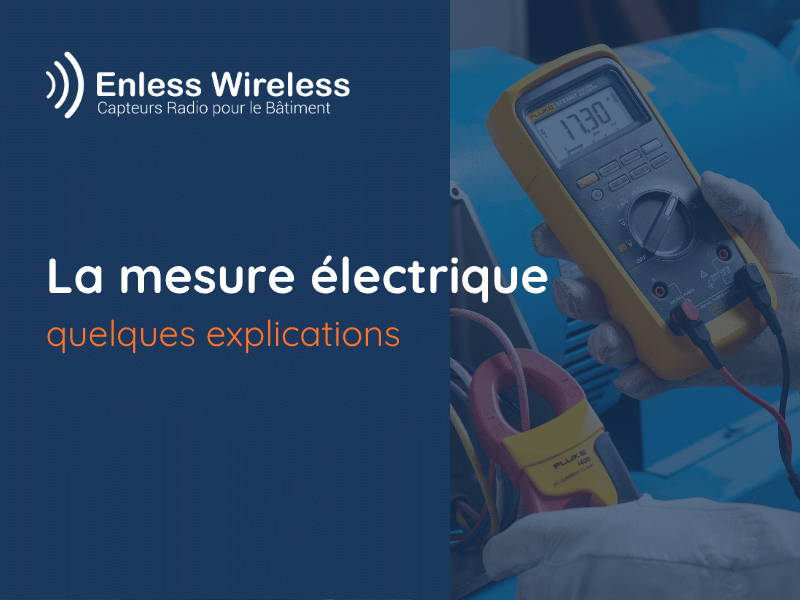
In the electronics and electrical industry, electricians use electrical measuring instruments to measure the electricity flowing through electrical cables or any electrical system. Depending on the variable they wish to measure, they have a range of tools at their disposal to assist them in their work. What variables can be used to measure electricity? What measuring devices are available? The answers to these questions can be found in the rest of this article.
A concept that is particularly crucial for energy efficiency.
What are the different units of electrical measurement?
Electricity is a form of energy that can be quantified through electrical measurement. In the electrical and electronics sectors, electrical measurement is used to measure several variables: voltage, current, power, energy, and electrical resistance. An electric current is generated when negative charges move due to the movement of electrons. The movement of these negative charges, carried by electrons, generates the electric current.
Electrical voltage
Electrical voltage is used to quantify the electrical potential present in an electrical conductor. The unit of measurement used to determine electrical voltage is thevolt (V). A voltmeter is required to accurately measure electrical voltage.
Electric current
Denoted by thesymbol A, electric current is measured inamperes. Current refers to the flow of electrons in an electric circuit. To better explain electric current, it is often compared to the flow rate of water through a pipe when the faucet is turned on. Using this measurement variable, it is possible to determine the speed at which electrons flow through an electrical circuit. To measure current, an electrician uses an ammeter.
Power
It is measured inwatts (W)and depends on both current and voltage. To better explain the measurement variable known as power, consider a water jet. The power of a water jet depends on the water pressure and flow rate.
Energy
Energy, which is typically measured inkilowatt-hours, is the amount of power used over a certain period of time. Energy is used to estimate the population’s electricity consumption.
Electrical resistance
This measures a material’s ability to resist the flow of electricity. In an electrical circuit, electrical resistance is used to convert electrical energy into another form of energy. A multimeter is used to measure electrical resistance, and its unit of measurement isthe ohm (Ω).
The frequency
In the context of alternating current, frequency refers to the number of cycles the electric current completes as it flows through conductors. It is measured in hertz (Hz).
The electric field
An electric field is the force that attracts or repels other electric charges. This quantity corresponds to the force exerted by a material in its vicinity when no electric current is flowing and the material is energized. Its unit of measurement is thevolt per meter (V/m).
Here is a brief overview of the various units of measurement for electricity.
Electrical measuring instruments
Electrical measurements are used to gather information about potential energy-related issues in your electrical systems. There are many different measuring instruments available for taking these measurements. Here are a few tools you’ll find in an electrician’s toolkit.
The multimeter
Apart from a few measurements specific to certain devices, a multimeter can be used to measure a number of variables. This instrument can measurevoltage,resistance,current, andcontinuity. In addition, it comes in several types, including theanalog multimeter, theammeter multimeter, and thedigital multimeter. To read the measurement on an analog multimeter, you must rely on the position of the needles on the dial. On a digital multimeter, however, the values are displayed on the digital screen.
Current clamps
It is used to measure the current flowing through various electrical conductors. It is easy to use; simply clamp it onto the conductor to determine the current. There are two types of clamp meters:rigid-jaw clamp metersandflexible-jaw clamp meters. Flexible-jaw clamp meters are designed specifically for measuring alternating current. Rigid-jaw clamp meters, on the other hand, can measure both alternating and direct current.
The ammeter
It is a device used to measure electric current in an electrical circuit. There are several types of ammeters, namelydigital ammetersandanalog ammeters. The analog ammeter measures the average value of the current flowing through an electrical circuit. The digital ammeter, on the other hand, measures the voltage across a shunt in volts (this is the current’s resistance).
This list of instruments is not exhaustive and does not cover all devices used in electrical current measurement.
In short, electrical measurement is used to measure units of electric current. To read the values, measuring devices are required. There are several measuring instruments available for this purpose.