Régaz-Bordeaux, a public natural gas distributor based in the Bordeaux region, is responsible for natural gas transmission, network connections, and network maintenance and safety for the 45 municipalities in the Gironde department located within the geographical areas of the Médoc region and the Bordeaux Metropolitan Area, which encompasses both banks of the Garonne River.
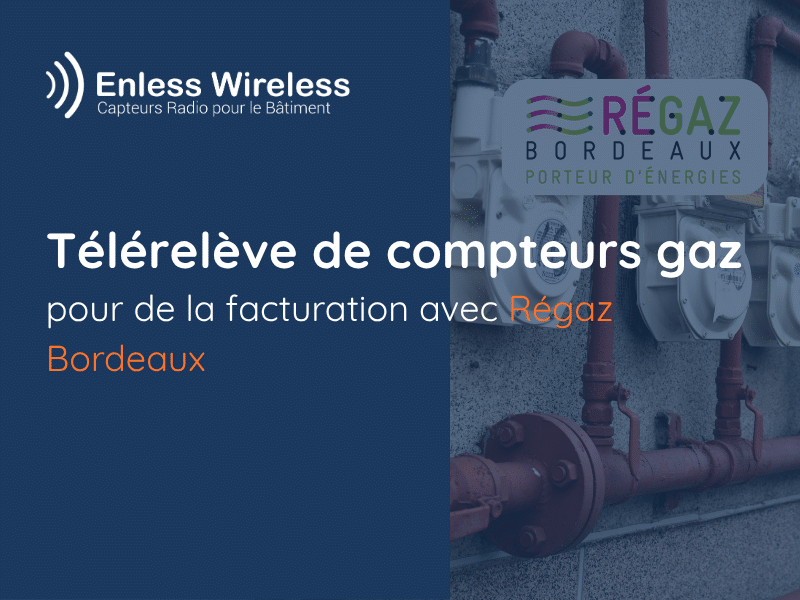
Since the beginning of 2019, Régaz-Bordeaux has been upgrading the gas meters of its high-volume business customers to automated remote meter reading systems.
The ultimate goal of these installations was to ensure fair and efficient billing for Régaz-Bordeaux customers by eliminating the need for technical teams —who had previously been responsible for manually reading gas meters on each system— to make regular on-site visits . It should be noted that the Energy Regulatory Commission requires gas distributors and suppliers to conduct monthly readings of gas consumption for each high-volume customer.
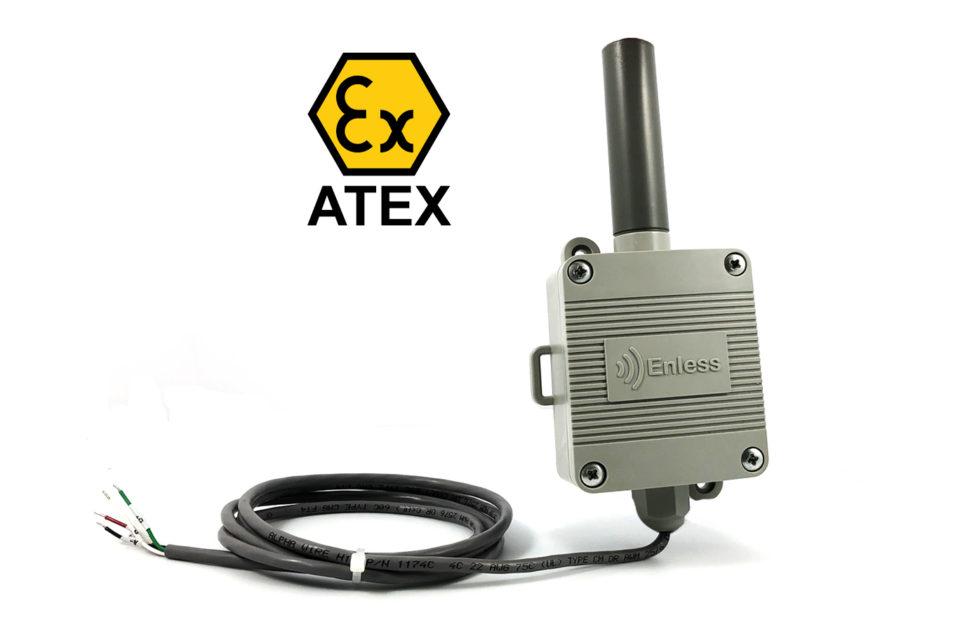
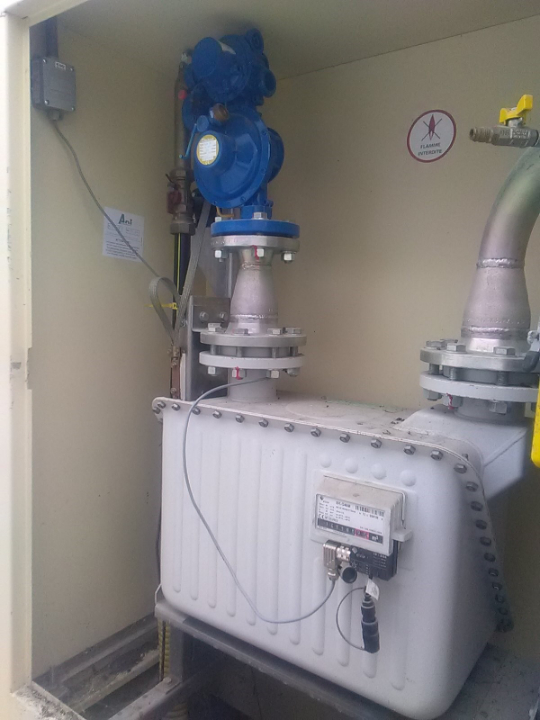
Enless Wireless has been selected by the natural gas distributor to provide automatic meter reading through the installation of an initial batch of 200 Pulse Atex transmitters for gas pulse meters.
"We are very satisfied with the solutions provided by Enless Wireless. “Their sensors, with their two meter inputs, allow connection to both the meter and the converter, if necessary. They are compatible with all gas meters on the market, particularly Itron meters, which are the most widely used,” says Bruno Bonnefoi, Metrology and Remote Monitoring Foreman in the Maintenance Department at Régaz-Bordeaux.
To date, two-thirds of the sensors ordered have been deployed across a total of 130 sites, including public and private residences, hospitals, municipal buildings, schools and educational institutions, castles and vineyards, and industrial sites… Notably, the regional sites of Dassault and Ariane Group have been equipped, as well as the Aubiers residences, managed by Domofrance, the Gradignan Media Library, and the Nadalié Cooperage in Ludon-Médoc…
Consumption data transmitted by Enless Wireless transmitters via the Sigfox communication protocol is managed in real time by Régaz-Bordeaux through the I/O web visualization platform developed by industrial solutions provider Technilog. The aggregated data is then transmitted to energy suppliers such as Engie, Gaz de Bordeaux, and ENI, which are able to bill their customers.
“Technilog’s I/O web visualization platform is concise, user-friendly, and efficient. It allows us to view consumption data by site on a regular basis, but also provides a simultaneous overview of all 200 of our equipped sites, which is very convenient,” explains Bruno Bonnefoi.
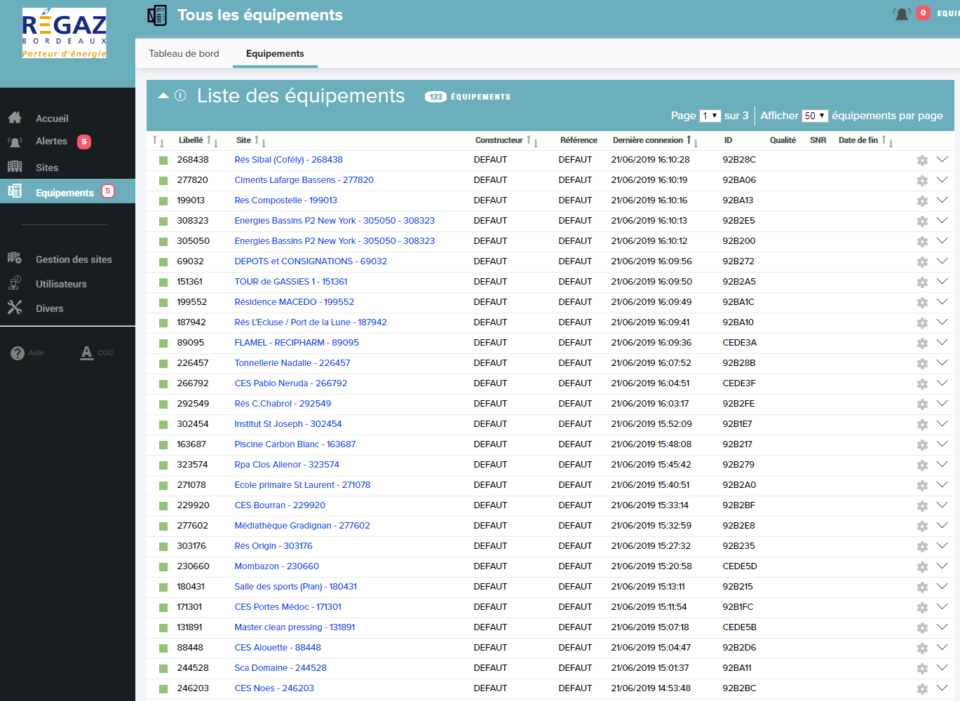
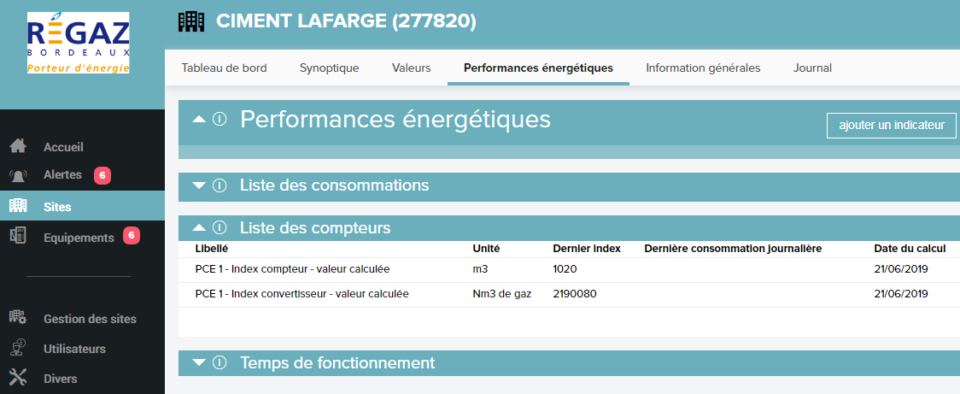
The installations that have already been completed have not required any on-site visits by the Régaz-Bordeaux teams and have already eliminated the need for 250 trips over a two-month period.
Bruno Bonnefoi explains: “We haven’t encountered any maintenance issues so far. In the past, we tested an alternative remote meter reading solution that didn’t use radio transmission but relied on automated monthly text messages… We encountered numerous bugs; the solution was unreliable, and our teams ultimately had to make regular on-site visits to verify actual consumption. The radio transmission method is much more reliable and efficient; to date, we have not experienced any transmission failures.”
About 100 future deployments are planned by the end of the year; these deployments may involve Enless Wireless transmitters based on other technologies, such as the 169 MHz Wireless M-Bus private radio mode or LoRa (the Enless Wireless LoRa range will be available by the end of 2019).
About Régaz-Bordeaux:
Régaz-Bordeaux manages the public distribution of natural gas across 45 municipalities in the Gironde region with a staff of 277 employees. The company serves a total of 222,000 active meters, including residential, municipal, and commercial customers. Régaz-Bordeaux reported revenue of 76 million euros for its most recent fiscal year.
The two main areas where Régaz-Bordeaux customers use natural gas are, in order, heating and industrial processes.
Click on the icons below to share this article on social media >>>