Background and Challenges
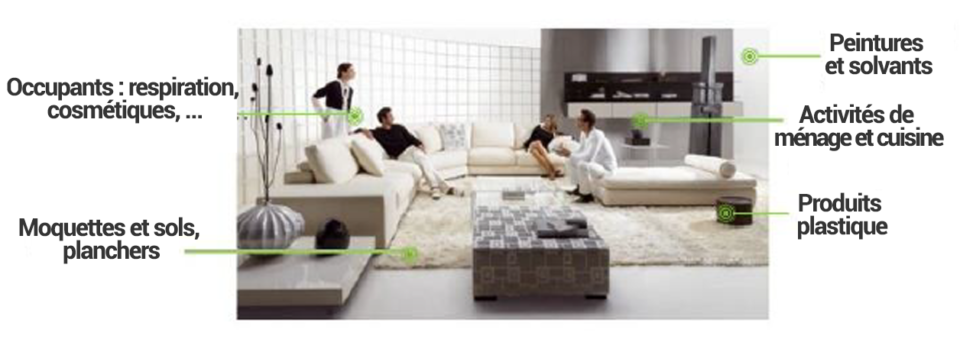
In practical terms,the VOC level measures a mixture of various volatile organic compounds that may originate from building materials such as carpets and flooring, furniture, paints, solvents, cosmetics, and plastic-based products, as well as gases emitted from cooking and cleaning activities.
Just like CO2 levels, VOC levels are directly linked to indoor air quality and associated IAQ levels.
Poor air quality can directly affect the comfort, well-being, and health of occupants and cause “sick building syndrome,” which manifests as headaches, eye irritation, or dizziness.
These symptoms can lead to reduced productivity and learning difficulties among students and schoolchildren.
Regulatory requirements and permissible thresholds
Different standards exist for defining the legally permissible thresholds above which it is recommended to take measures to reduce the observed VOC levels.
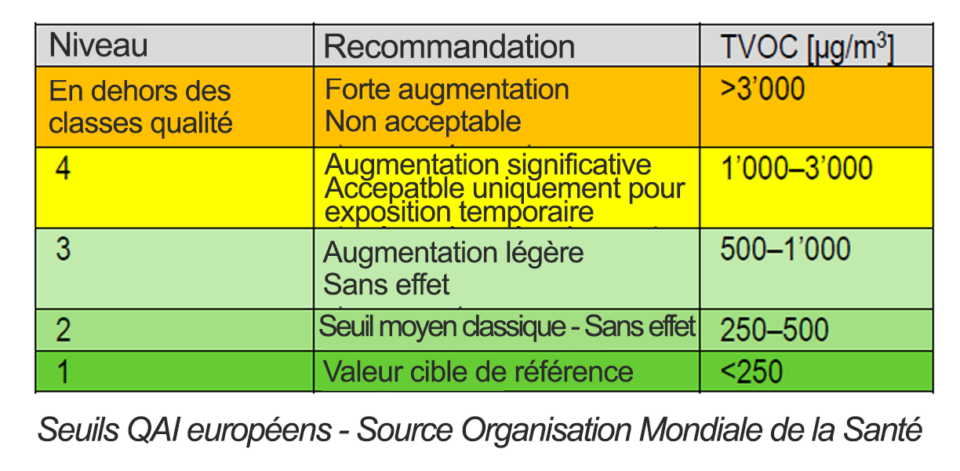
The World Health Organization is responsible for establishing the recommended concentration thresholds for volatile organic compounds in Europe.
It defines several levels/classes and estimates thatexposure levels exceeding 1,000 μg per cubic meter of air pose a risk associated with prolonged exposure.
Above 3,000 μg per m³, it prohibits any exposure, even temporary.
The reference value is set at less than 250 μg per m³.
Other standards, such as German standards or the LEED rating system—which was developed to measure the environmental and energy performance of buildings —set even stricter thresholds and thus recommend permissible VOC concentration limits of less than 1,000 μg per m³ of air and less than 500 μg per m³.
Measured values
The Enless Wireless transmitter models capable of collecting VOC (volatile organic compound) concentration data are as follows:
• TX VOC / T&H AMB 600-022
• TX CO2 / VOC / T&H AMB 600-023
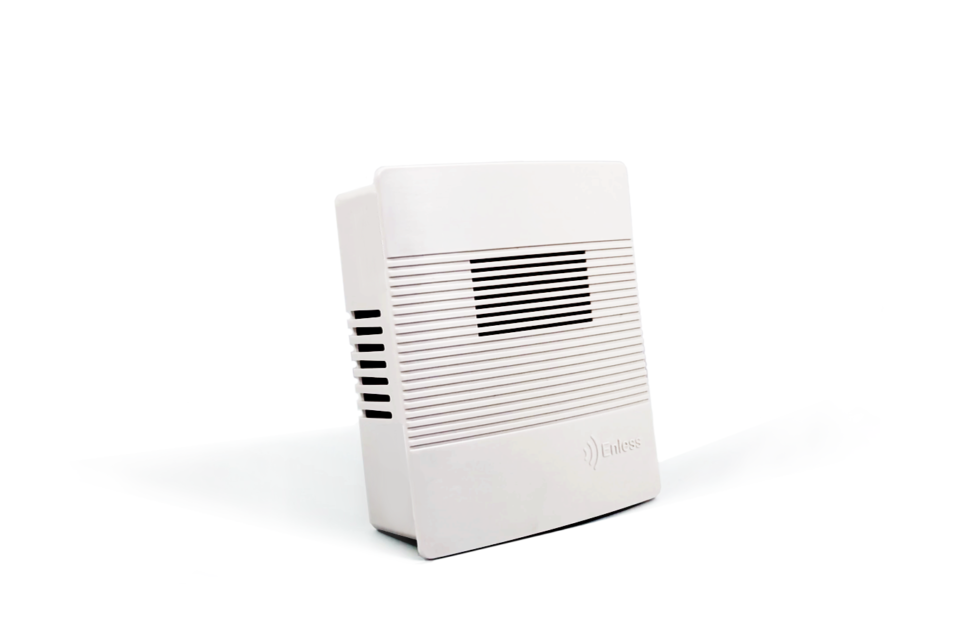
The sensor used is the SGP30 from Sensirion, a multi-pixel MOX gas sensor that meets high quality standards.
It was selected for its sensitivity to a wide range of volatile organic compounds and other gases relevant to indoor air quality measurement. Twenty-two volatile organic compounds are thus selected and measured.
VOCs include all chemical compounds based on carbon chains or rings with a vapor pressure greater than 0.01 kPa at room temperature.
VOC Measurement Method for Enless 600-022 and 600-023 Transmitters
The ISO 16000-29 standard for indoor air quality outlines standardized methods for detecting VOCs.
Ethanol is the gas selected and used for the calibration and qualification of the SGP30 VOC sensor used in Enless Wireless transmitters.
For what types of applications?
Many applications require monitoring of indoor air quality (IAQ) levels by measuring VOC concentrations.
For example, if the concentration of volatile organic compounds exceeds a certain threshold, corrective measures such as air purification, filtration, and ventilation/air circulation can be implemented.
In addition, Enless Wireless transmitters are smart devices capable of detecting excessive VOC levels, helping businesses improve indoor air quality at their sites by identifying sources of poor air quality.
Click on the icons below to share this article on social media >>