The BACS decree requires the installation of automation and control systems in certain commercial buildings. Its goal is to better monitor energy consumption, detect deviations, and automatically control technical equipment.
Since the regulatory amendment published in late 2025, the deadline for existing buildings equipped with systems ranging from 70 to 290 kW has been set for January 1, 2030, rather than 2027. Here are the requirements you need to know to prepare for compliance.
What is a BACS system?
BACS stands for Building Automation and Control System. It is a suite of products, software, and services used to monitor, analyze, and control a building's technical systems.
A BACS system can handle, among other things:
- Heating
- Air Conditioning
- Ventilation
- Hot Water Production
- Lighting
- Energy Metering
- Energy-Generating Equipment
BMS , and BACS are therefore closely linked. An “ BMS ” can be considered equivalent to a BACS system when it performs all of the regulatory functions of monitoring, analysis, interoperability, and automatic regulation. The ministry explains this relationship in detail in its FAQ dedicated to the link between BACS and BMS.
Which buildings are covered by the BACS decree?
The decree applies to commercial and noncommercial service sector buildings—both new and existing—equipped with a heating or air-conditioning system with a rated output exceeding 70 kW.
This capacity is evaluated at the level of the system in question. Heating and cooling capacities are not added together. In the case of a heating or cooling network, the capacity of the heat exchange station must be taken into account.
Unlike the Tertiary Decree, compliance with the BACS Decree does not depend directly on the building’s floor area. It is based primarily on the power of the technical equipment.
The responsibility lies with the owner of the heating or air conditioning system. In a condominium or housing complex, this may therefore involve several owners. These rules are specified inArticle R.175-2 of the Construction and Housing Code.
What are the deadlines under the BACS decree?
| Location | Due Date |
|---|---|
| Existing building with a system capacity exceeding 290 kW | January 1, 2025 |
| Existing building with a system capacity greater than 70 kW and less than or equal to 290 kW | January 1, 2030 |
| New building with a system rated at more than 70 kW | Requirement applicable based on the filing date of the building permit |
The extension to 2030 for existing facilities with a capacity of 70 to 290 kW is provided for in the decree of December 26, 2025.
What functions should the BACS system perform?
A compliant system does more than simply display energy consumption data on a dashboard. According toArticle R.175-3 of the French Building and Housing Code, it must, in particular, allow for:
- Track, record, and analyze energy consumption and generation
- Retain monthly data for five years
- Compare energy performance to benchmark values
- Identify efficiency losses in equipment
- Inform the operator about opportunities for improvement
- Communicate with the building's various technical systems
- Automatically adjust equipment operation
- Enable manual shutdown and autonomous management of facilities
Therefore, a simple energy monitoring program or a set of sensors is not enough if the equipment cannot be controlled automatically.
Are there any exemptions?
An exemption may be considered if the owner demonstrates, through a study, that the installation of a BACS system is not feasible with a payback period of ten years or less.
The exemption must therefore be supported by a documented analysis. The calculation method is detailed in the official FAQ on return on investment.
What role do sensors play in ensuring compliance?
Sensors form the field layer of the BACS system. They provide the building BMS with the data needed to understand the building’s actual operation and make control decisions.
Depending on the equipment and its intended use, they can measure:
- Temperature and Humidity
- CO₂ concentration
- Water, gas, or electricity usage
- Opening Doors and Windows
- The operating condition or defects in the equipment
- Network and Production Temperatures
This data must then be centralized, archived, and analyzed by the BMS. Finally, actuators or control interfaces are used to implement the settings defined by the system.
How do Enless solutions integrate into a BACS architecture?
Enless wireless sensors make it possible to retrofit existing buildings without installing new communication cabling to each measurement point. This approach can facilitate the renovation of a large or occupied commercial building portfolio.
In particular, it is possible to trace back:
- Meter Readings from Pulse-Output Meters
- Temperature and humidity in the premises
- CO₂ as a Key Component of a Ventilation Strategy
- Contact statuses and openings
- Information from Modbus devices
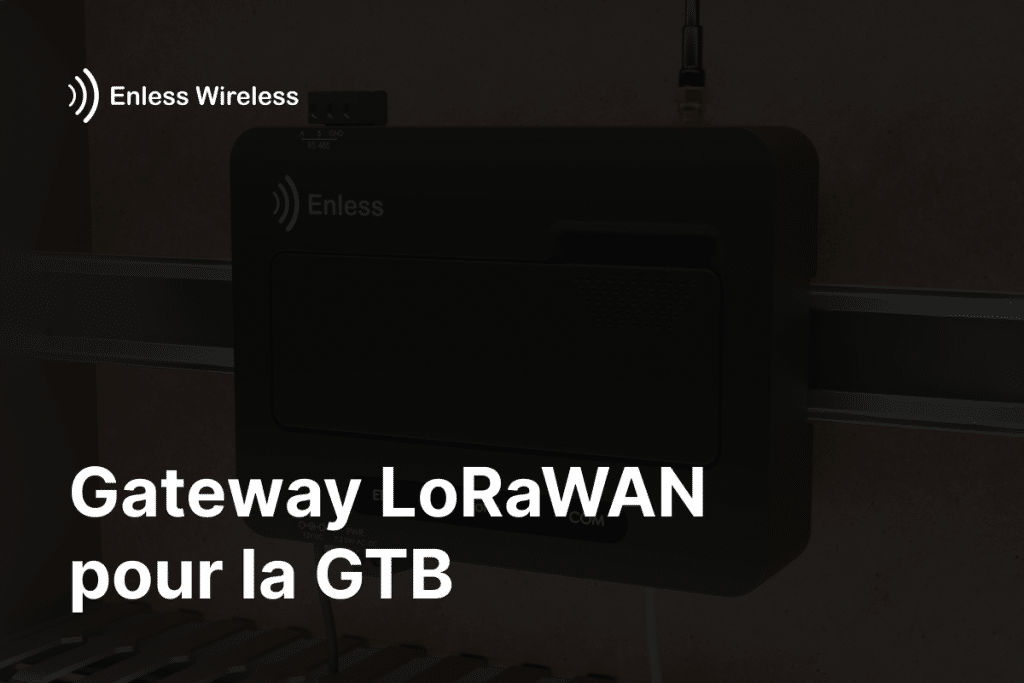
Data can be transmitted to BMS using LoRa Easy receivers or the Enless LoRaWAN gateway, and then made available via Modbus or BACnet, depending on the deployed architecture.
For example, the Enless LoRaWAN pulse sensor can enable existing meters to communicate. The CO₂, temperature, and humidity sensor can provide additional monitoring of environmental conditions.
The configuration and integration guides are available in the Enless GitBook technical documentation.
Enless products contribute to the acquisition, transmission, and—depending on the equipment—execution of commands. However, they do not, by themselves, constitute a BACS-compliant system. Compliance depends on the overall architecture, the programming of the BMS, automated functions, documentation, and inspections.
How do you prepare a compliance project?
A BACS process can be organized in several steps:
- Identify heating, cooling, and ventilation systems
- Calculate their rated power output
- Identify the owners and managers of the facilities
- Audit the existing BMS , and automation systems
- Define the necessary measurement, alarm, and control points
- Choosing an Appropriate Communication Architecture
- Configure control scenarios and history data
- Train the operations teams
- Compile the technical documentation
- Schedule Regulatory Inspections
Does the BACS system need to be inspected?
Yes. As of January 1, 2025, the system must undergo a periodic inspection at least once every five years. After installation or a major modification to the BACS or a connected technical system, an inspection must be conducted within two years of acceptance.
The owner must also retain reports and documents describing the architecture, protocols, connection points, and functional analysis. The procedures are outlined in the official FAQ regarding BACS inspections.
The BACS Decree and the Tertiary Decree: What’s the Difference?
The Tertiary Sector Decree sets energy consumption reduction targets for commercial buildings with a floor area of at least 1,000 m².
The BACS decree requires monitoring and control measures for buildings equipped with heating or air-conditioning systems that exceed certain power thresholds.
The two sets of regulations are complementary: the “ BMS ” and the automation systems implemented under the BACS decree can help achieve the objectives of the Tertiary Decree.
In summary
The BACS decree requires affected commercial buildings to have a system capable of automatically measuring, analyzing, and adjusting their technical equipment.
For existing buildings:
- The regulatory threshold is greater than 70 kW
- The deadline for facilities with a capacity exceeding 290 kW was set for January 1, 2025
- The deadline for installations ranging from 70 to 290 kW is set for January 1, 2030
- An exemption is still possible when the payback period exceeds ten years
Enless supports BMS and HVAC integrators in collecting and transmitting via radio the data needed for energy management. Discover Enless’s solutions for BMS or contact the Enless team to discuss your system architecture.