
The industry is partnering with the university through the prestigious Paris Faculty of Medicine to demonstrate how building managers can control the spread of viruses.
“Field studies on COVID-19 have highlighted the link between poor air quality and rising infection rates and clearly demonstrate that an IoT-based solution can now help building managers limit the spread of viruses such as COVID-19.” – Prof. Bertrand Maury, Paris-Saclay University
| Microshare | Kerlink |
| > Headquarters: Philadelphia, United States > Founded: 2013 > Industry: Smart Building and IoT data management solutions |
> Headquarters: Thorigné-Fouillard, France > Founded: 2004 > Industry: Global provider of solutions for the Internet of Things |
| Project: Faculty of Medicine — Bicêtre Hospital, AP-HP (Assistance Publique-Hôpitaux de Paris) Founded: 1885 Sectors: Medicine, healthcare, higher education |
Challenge
A study[1] published in 2018 by the U.S. Environmental Protection Agency (EPA) found that indoor air is 100 times more polluted than outdoor air and that people today spend at least 80% of their time indoors. The same study demonstrated that, unlike outdoor air pollution, indoor air pollutants are about 1,000 times more likely to be inhaled and thus reach the lungs, thereby causing illness.
A 2018 British study[2] conducted for the British Council for Offices (BSO) reports that the performance of tasks requiring concentration andattention is directly affected by indoor environmental conditions such as temperature, relative humidity, and CO2 levels. It also demonstrated that precise temperature control and adequate monitoring of CO2 levels can directly reduce stress levels among staff, customers, visitors, and tenants, while improving their productivity and satisfaction. This study echoes the findings of a 2012 study that assessed the direct effects of increased CO2 concentrations in indoor air on decision-making.[3]
The COVID-19 pandemic has, moreover, drawn scientists’ attention to the central role played by indoor air quality management as a key factor in combating the spread of viruses. However, there is still a lack of concrete data for assessment, measurement, and modeling that would allow us to demonstrate and substantiate these theories, as well as to define the appropriate actions that follow from them. This is where the Internet of Things (IoT) comes into play.
The origins of the project
The pilot program at Bicêtre Hospital (AP-HP) aimed to control the spread of COVID-19 by anonymously tracking students, faculty, and staff during their daily activities at the facility.
From the outset, the project focused on developing epidemiological models of COVID-19 transmission through the anonymous tracking of transmission chains (contact tracing) linked to prolonged close contact in enclosed environments, such as public spaces, classrooms, or workplaces. By combining standard IoT technology and equipment from Kerlink, Microshare, and Enless Wireless with new mathematical models simulating the spread of COVID-19, a team dedicated to the project designed and installed a pilot system in the Faculty of Medicine in late 2021. In addition to the companies involved, the project team included staff members from the Faculty of Medicine and scientists from various technology-focused organizations.
Nearly 200 students and about 20 volunteer staff members, who wore Bluetooth badges during their classes, lab sessions, and duties at the Faculty of Medicine, participated in the three-month trial during the fourth quarter of 2021. The system anonymously tracked their movements and locations using specialized mathematical models developed by two scientists from Paris-Saclay University, Professors Bertrand Maury and Sylvain Faure, as well as through continuous monitoring of indoor air quality on campus. These models simulated the spread of the COVID-19 virus among the student population based on contact tracing matrices.
The project was funded by Paris-Saclay University with €12,000 in administrative costs and received support from the faculty’s vice-dean,Dr. Olivier Lambotte, as well as from two physicians,Drs. Florent Besson and Nicolas Noel, of the Paris-Saclay Faculty of Medicine (Bicêtre Hospital, AP-HP site). The results were validated by the clinical research unit of the Paris-Saclay Faculty of Medicine, and the contact tracing matrices were inspired by an algorithm developed at the CNRS. The protection of personal data and the identity of participants in the pilot project was fully compliant with the GDPR.
Air quality monitoring and CO2 analysis within the facility were conducted simultaneously to assess their impact on transmission chains.
Timeline and Implementation of the Solution
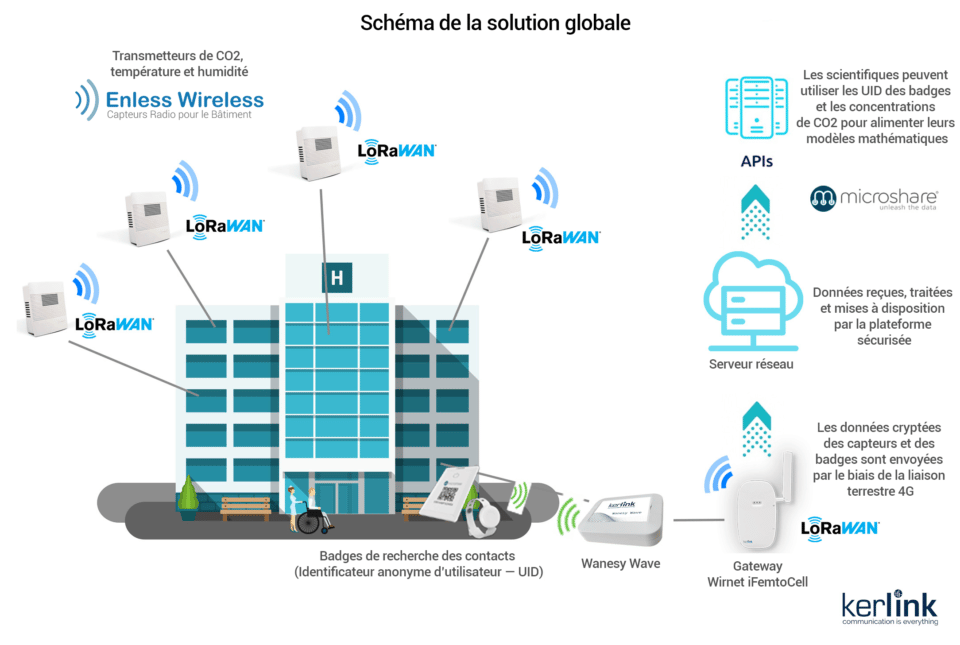
To collect data in the field, the system relied on technology developed by Kerlink, a specialist in IoT solutions, Microshare, a provider of cutting-edge data management solutions for the IoT era, and Enless Wireless, a leading manufacturer of self-powered smart sensors that communicate via radio waves and are designed for energy efficiency and comfort applications in buildings. This pilot project provided key information for contact tracing (Level 1) and CO2 concentration analysis (Level 2). The collected data was then fed into a mathematical model (Level 3) to analyze contact frequencies and virus spread in relation to ambient CO2 concentrations.
Level 1 — Contact Tracing
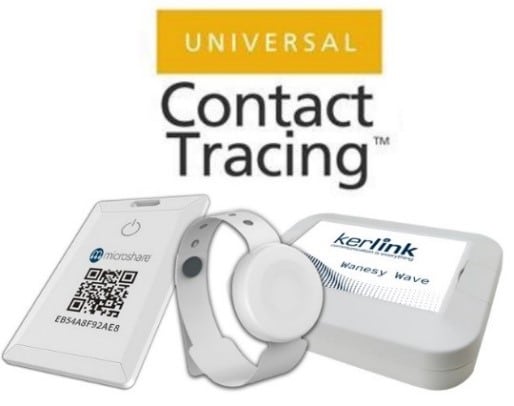
The LoRaWAN-compatible system used Kerlink’s Wanesy™ Wave, a multi-technology tracking anchor that combines Wi-Fi, BLE, andLoRaWAN®, to collect contact tracing data from Bluetooth badges. It also included a Kerlink Wirnet™ iFemtoCell indoor gateway to transmit the data to the Universal Contact Tracing app® (UCT) app, which ensures end-to-end security, privacy, and reliability by delivering only the essential information required.
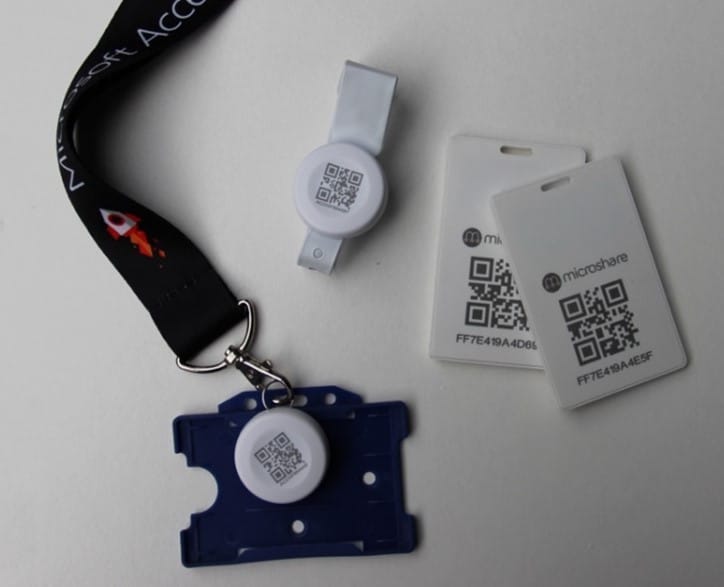
The data generated complied with the GDPR and was delivered at the appropriate time via Microshare’s patent-pending rules and sharing engine, and only to the appropriate individuals designated for that purpose within the organization.
" Microshare'sUniversal Contact Tracing solution is designed to ensure occupant safety and universal access, and is based on wearable connected devices, which helps address the security vulnerabilities and privacy concerns associated with smartphones. While anonymously tracking contact between occupants of a facility using badges, wristbands, and keychains, it avoids the vulnerabilities of the smartphone approach, where data can be disabled, batteries can run out, or devices are shared among people working different shifts. It also relies on LoRaWAN® gateways separate from private networks, thereby avoiding the serious security issues associated with Wi-Fi or mobile data.”–Charles Paumelle, Product Manager and Co-founder of Microshare
Level 2 — CO2 monitoring
Enless Wireless contributed to the pilot project by providing indoor air quality sensors that are easy to install and connect, featuring built-in CO2 sensors and high-capacity D-cell batteries.
The contact tracing app for indoor settings was therefore integrated with an air quality monitoring system that included:
- CO2 levels in the premises based on occupancy rates and hours, as well as ventilation settings,
- malfunctions in the ventilation system or necessary maintenance of ventilation equipment, and
- the air change rate per hour (ACR), or the rate at which the air in a room is completely replaced, which is a key performance indicator (KPI) monitored by building managers in their daily operations.
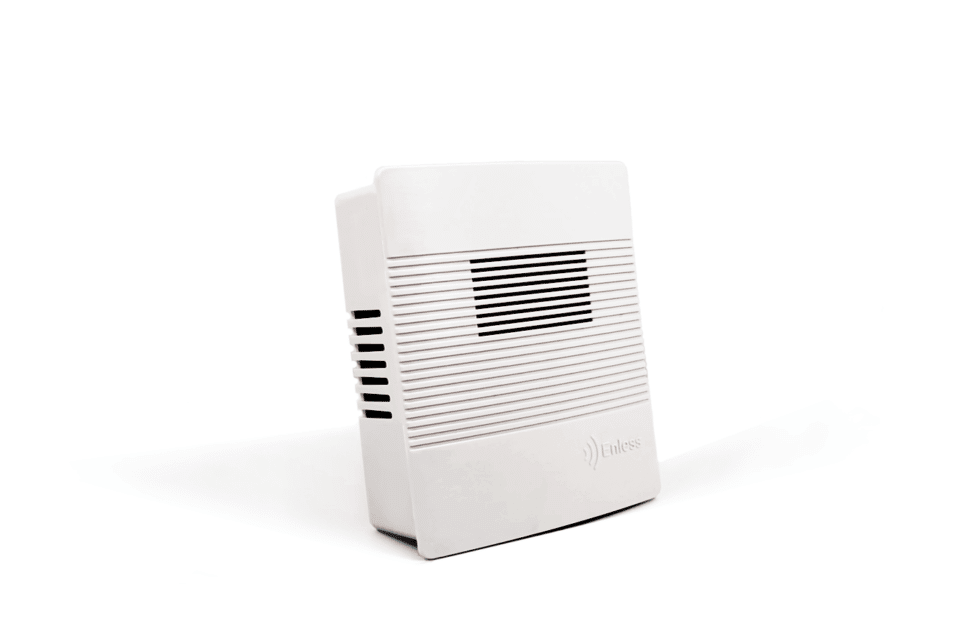
TX CO2 VOC T&H Amb 600-023 –Enless Wireless© 2022
Level 3 — Algorithms and Scientific Models
The initial mathematical models used in the pilot system were developed using internal data from a UCT trial at Kerlink’s Rennes headquarters, where employees were equipped with Microshare UCT badges for eight months in 2020, at the height of the pandemic.
The enhanced contact tracing matrices were then derived from an algorithm developed by the CNRS and Paris-Saclay University, where Professors Bertrand Maury and Sylvain Faure created the algorithms that define the epidemiological models of virus transmission. Thanks to the deployed system, this algorithm was also able to incorporate an initial assessment and correlation of the influence of CO2 concentration as an indicator of poor air quality that could accelerate viral transmission—for example, a CO2 level indicating insufficient indoor air exchange.
Key findings
Air quality was monitored hourly, as were CO₂ levels in the rooms, taking into account occupancy rates, the schedule, and ventilation periods. The measurements obtained also made it possible to detect ventilation malfunctions, recommend maintenance for the relevant equipment, and identify participants’ behaviors and/or areas where the risk of contamination was increased. It was therefore possible to develop an educational approach and assist the Faculty of Medicine staff in planning the use of lecture halls as well as in promoting healthy practices among occupants.
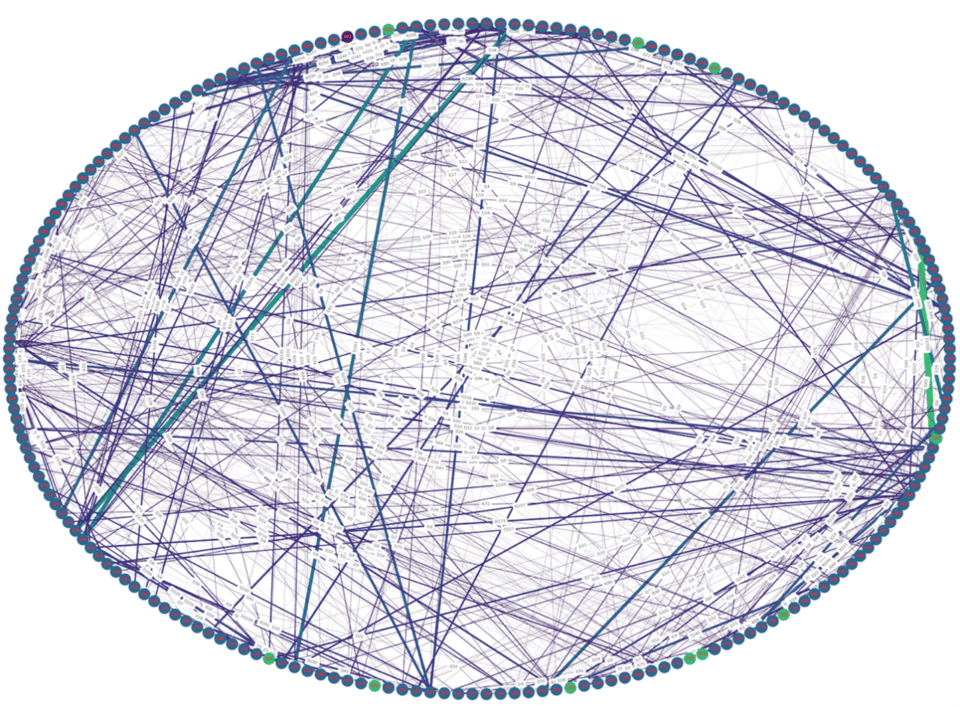
Source: B. Maury, S. Faure — Université Paris-Saclay© 2022
A low air exchange rate leads to high levels of aerosols and, potentially, viral particles.
The level of CO2 concentration in an enclosed space can be used to monitor the air exchange rate and indicate the risk of increased exposure to airborne viral particles. Regular ventilation is therefore essential, particularly by opening windows or setting an optimal hourly air exchange rate (HAR).
Professor Lambotte, associate dean of the Paris-Saclay Faculty of Medicine, stated that the analysis of COVID-19 transmission and the desire to develop an “improved alert system” based on epidemiological models were the catalysts for this project, and that the objectives were achieved through air quality monitoring based on CO2 level analysis.
“Based on these initial findings, the School of Medicine will be able to refine its measures to combat the spread of epidemics through a better understanding of interactions among students and improved control of air quality. Mathematical modeling of air exchange in a classroom or lecture hall makes it possible to estimate in advance the maximum number of people who can be present in order to keep the CO2 level below a set threshold.”–Prof. Olivier Lambotte, Vice Dean of the Paris-Saclay Faculty of Medicine
“The trial demonstrated that these solutions can help building managers improve indoor air quality in workspaces to reduce the risk of contamination or viral transmission, which can impact occupants’ well-being, concentration, and performance. Furthermore, this system, which uses our 100% plug-and-play, self-powered indoor air quality monitoring devices, can be an affordable solution for hospitals, nursing homes, universities, schools, and public buildings.” – Caroline Javelle, Head of Marketing and Communications at Enless Wireless
“In addition to helping doctors and scientists describe and understand COVID-19 transmission patterns, the trial demonstrated that LoRaWAN® solutions for indoor air quality management—comprising individual standalone contact-tracing beacons, connected CO2 sensors, apps, and AI algorithms—constitute a reliable, cost-effective system that is easy to deploy and use for monitoring air quality in buildings. ” –Benjamin Maury, Head of International Partnerships at Kerlink
Further reading (in English)
“Managing Air Quality – Types of Air Pollutants” U.S. Environmental Protection Agency
https://www.epa.gov/air-quality-management-process/managing-air-quality-air-pollutant-types
“Improving Productivity in the Workplace” British Council for Offices
https://emcoruk.com/workplace_productivity.pdf
[3] “Is CO2 an Indoor Pollutant? Direct Effects of Low-to-Moderate CO2 Concentrations on Human Decision-Making Performance,” Usha Satish, Mark J. Mendell, Krishnamurthy Shekhar, Toshifumi Hotchi, Douglas Sullivan, Siegfried Streufert, and William J. Fisk, in Environmental Health Perspectives, volume 120 — issue 12, December 2012, pages 1674–1677.
*Written by: Kerlink
Click on the icons below to share this article on social media >>