EMC2, WIT, and Enless are collaborating to ensure the safety and comfort of the most vulnerable

In France, there are strict requirements regarding the monitoring of domestic hot water systems in establishments open to the public (such as hotels and restaurants), and these requirements are even more stringent for establishments that serve vulnerable or at-risk populations.
This is the case for a retirement home in the Provence-Alpes-Côte d’Azur region, which was recently equipped with a monitoring system for its domestic hot water network.
The project was implemented by EMC2 Energies Maintenance Chauffage Climatisation, a Gap-based service company specializing in energy management that has been providing maintenance, sales, and installation services forheatingandair conditioning systemsin the Hautes-Alpes and Alpes-de-Haute-Provence regions for over 35 years. EMC2 operates two in-house control services and is the exclusive regional partner of WIT, an integration firm and expert in environmental and energy transition, with which Enless Wireless has been collaborating for nearly five years on various building energy optimization projects.*
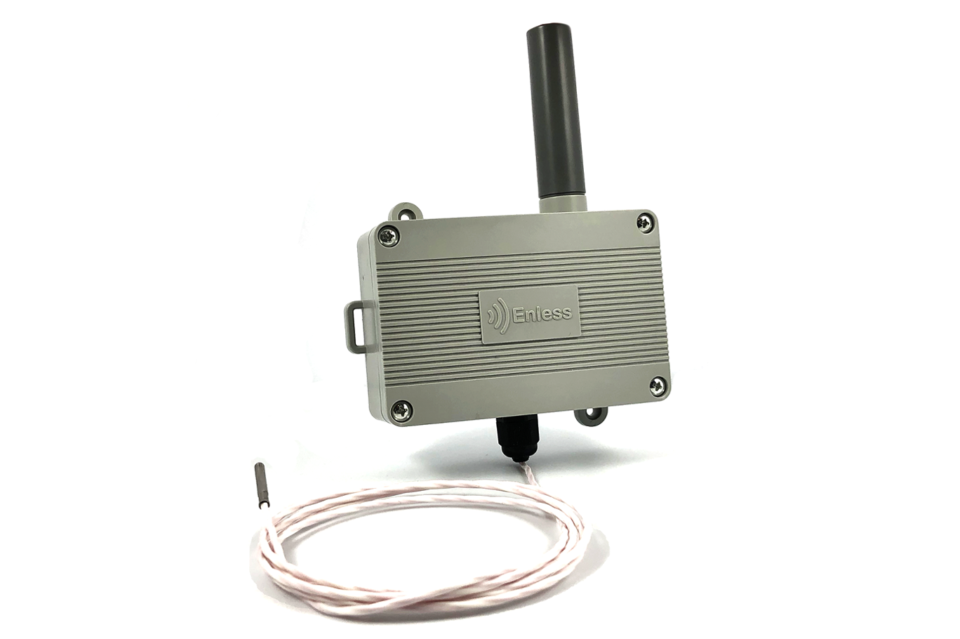
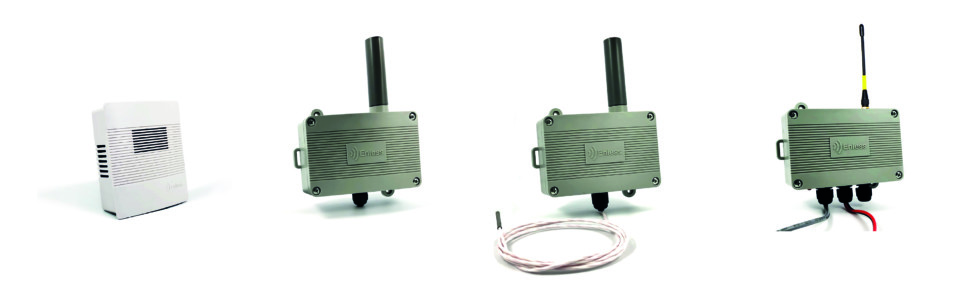
To monitor the facility’s hot water systems, 20 Enless Wireless wireless temperature transmitters with contact probes were installed at the inlets and outlets of the water systems; these devices communicate via the 169 MHz Wireless M-Bus private radio protocol.
The data, which is automatically collected and transmitted every 15 minutes to the on-site PLC, is then analyzed using the on-site WIT monitoring system.
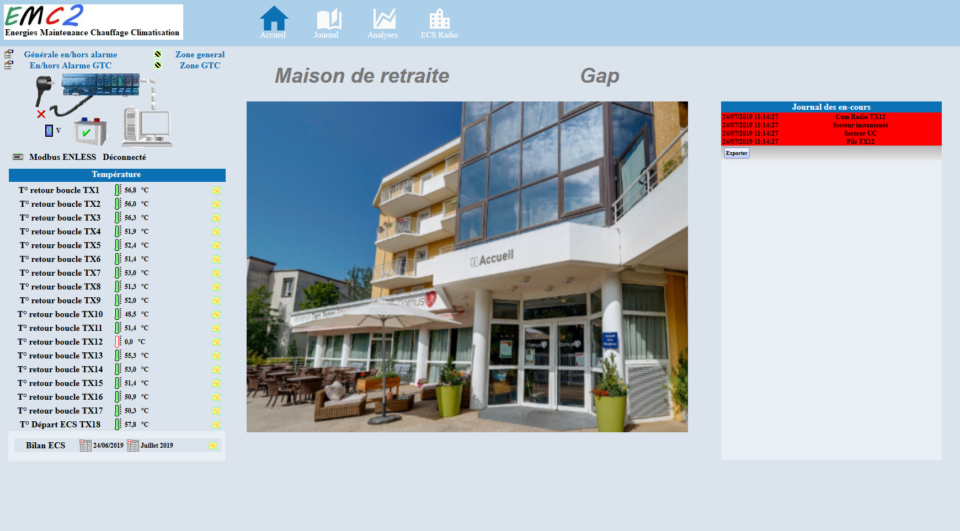
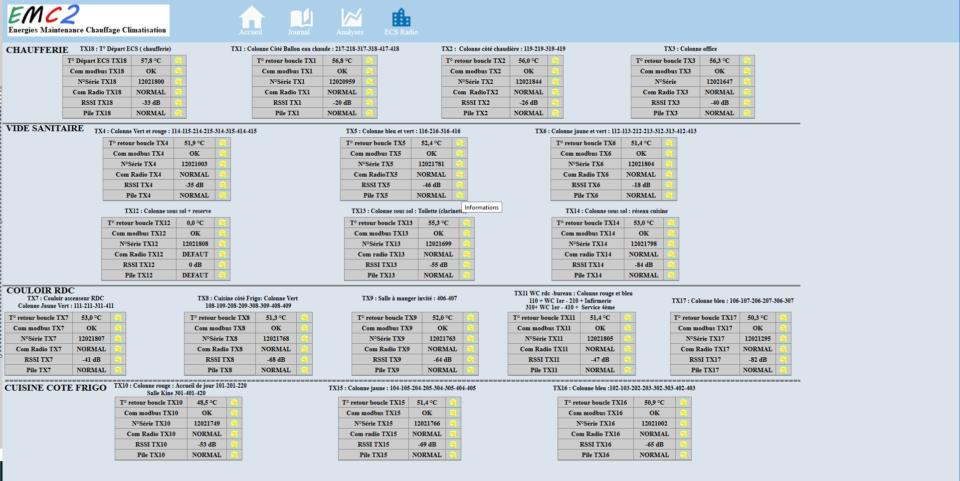
In the event of a deviation, the monitoring system triggers an alarm, and alert messages are then automatically sent via email or text message to the parties responsible for site maintenance—namely, the retirement home’s technical teams and EMC2 maintenance staff—who respond according to the level of urgency and severity to prevent, in particular, the risk of Legionella proliferation.

The risk of Legionella bacteria proliferating arises when the temperatures in the piping are below 50°C in the recirculation return line and below 55°C in the supply lines.
David Marchetti, Head of Automation and Maintenance at EMC2, says: “ The objectives of installing these systems go beyond simply controlling the risk of Legionella and detecting water leaks; the benefits are numerous! The solution enables significant energy savings by precisely controlling the temperature of the DHW systems and by making it possible to detect boiler failures or power outages, for example. Furthermore, it eliminates the need for manual maintenance, which used to be a major burden: a technician would come by every day to take readings by hand; moreover, the measurements were much less accurate because they were taken less frequently. The automation has been a complete success.”
The implementation of the remote monitoring system for the retirement home’s hot water system has already enabled the detection of several malfunctions in the pipes. Alerts regarding low water levels have made it possible to adjust the pipes, notably by having the maintenance teams install valves.
EMC2 and WIT plan to roll out this solution at other locations.
“The Enless transmitters work very well; they’re easy to set up compared to some other products on the market. Modbus works very well, and pairing is a breeze,”, says David Marchetti.
*About the WIT-Enless Wireless partnership:
Wit, a Nice-based company specializing in energy transition, and Enless Wireless have been collaborating for nearly five years, primarily on projects to equip public housing and schools.
Through its expert regional partners, WIT has sold and installed nearly 1,700 transmitters from Enless Wireless’s Wireless M-Bus product lines. Among the most widely deployed solutions are the Enless Wireless Pulse and Pulse Atex transmitters, which are used for remote meter reading of water, electricity, and gas meters, as well as Enless Wireless temperature sensors.
The relationship of trust between the two companies is based on the key strengths of the Enless Wireless M-Bus 169 MHz product line: long-range radio communication, long battery life, and product reliability.
Maxime Bignon, Head of Product & Customer Support, says: “Enless sensors are a true guarantee of reliability for our customers; their range is more than satisfactory and allows us to save on receivers and repeaters. Plus, they have excellent battery life. We don’t hesitate to recommend them to our customers, who give us a lot of positive feedback; and our teams don’t have to return to the site!”
> Découvrez notre gamme de produits Wireless M-Bus <
Check out our other similar use cases:
Hospitality Industry: The Added Value of Connected Maintenance for Hot Water System Management
OFIS – VEOLIA implements continuous monitoring of hot water systems using Enless sensors
Click on the icons below to share this article on social media >>>