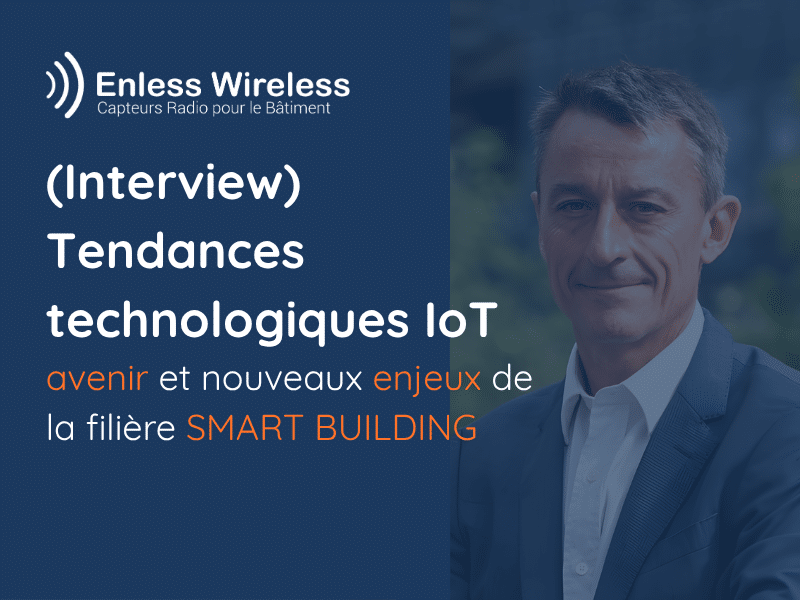

Conversation with Emmanuel François, President of the Smart Buildings Alliance
The SBA’s 2019 Summer Schools recently concluded in Brussels. What insights were gained, what notable developments emerged, and what will the cities and buildings of tomorrow ultimately look like?
E.F. The buildings and cities of tomorrow will indeed bear no resemblance to those of today, both in terms of their physical design and their uses.
Thissixth edition of the Summer Universities has clearly shown us that future buildings and structures will be more open and multi-purpose. Prefabricated and modular construction will become increasingly prevalent, with towers that can be built in 6 to 12 months and schools in 4 to 6 weeks! One of the major trends in smart building that is gaining traction is the sharing of spaces, pooling of resources, reversibility, co-living, and co-working…We are truly entering the era of “co.” Mobility is not being left behind either; we are seeing the emergence of new parking systems, where once again a significant emphasis is placed on sharing.
Is France ahead of its European neighbors—and other countries in general—when it comes to sustainable construction?
E.F.France seems to be lagging somewhat behind in the sustainable building revolution, particularly when compared to the Nordic countries, Germany, and the Netherlands, especially in terms of environmental awareness. The U.S. is also doing quite well in this area, as recent years have seen a boom in several players, as evidenced by the success of Katerra—which applies modern technology to every stage of building design and construction—and which, after only four years in business, has generated nearly a billion dollars in revenue. The United Kingdom, meanwhile, is ahead of the curve in prefabricated off-site construction, thanks to the widespread use of BIM.
In France, the main obstacles are organizational in nature. GTC BMS processes BMS highly compartmentalized, and there is a real lack of accountability. The issue is also managed in a more centralized manner in France than in other countries, and individual initiatives are rarer and more difficult to carry out.
And what about digital technology?
E.F. France, on the other hand, is ahead of the curve when it comes to the digital revolution as applied to buildings.
We are one of the countries with the highest number of startups in this field, which helps drive the sector forward. The The French R2S (Ready2Services) standard—, a certification that recognizes the commitment of players in the construction industry to connected and smart buildings, has also been contributing to this since 2012.
The emergence of the BOS—Building Operating System—as a single hub for data centralization and the cornerstone of the smart building emerged as France’s key strength in this area during the recent Summer Universities.
Speaking of the recent Summer Universities, what major IoT and technology trends emerged?
E.F. The trends we’re seeing point toward increasingly open systems that incorporate open APIs and interoperable, standards-based systems—all, of course, at a lower cost. LoRa, in particular, is part of this approach. The coexistence of private LANs (Local Area Networks) and public WANs (Wide Area Networks) is becoming increasingly common and in demand.
Significant challenges are emerging, particularly with the rollout of 5G in the U.S. and around the world, which, thanks to reduced latency, will revolutionize a wide range of services and industries.
When it comes to connected devices, standalone wireless solutions—such as those using radio communication—are becoming increasingly widespread. Tracking of connected devices is also becoming more common, as it enables multi-use, multi-user scenarios to track an object’s data and bill each user entity accordingly.
What approach should we ultimately adopt to successfully and effectively transition to new smart and sustainable buildings? In other words, what does the future hold for the industry?
E.F. The key lies in adopting a more comprehensive approach, led by a service provider who ensures the smooth operation of the project they manage. Our organizations are still too siloed, which prevents stakeholders in building management system ( BMS) projects from taking ownership.
The emergence of new professions, such as Building Services Operator, is leading to a new organizational model in which the building becomes a service platform —in line with the vision set forth in the R2S framework. The building’s entire infrastructure is then designed to maximize data utilization, thereby optimizing energy efficiency and expanding the range of services offered.
For the IoT sector, the key challenge is therefore to maximize the use of transmitted data, particularly by sharing it. For example, the same collected data can be used for security, space optimization, and mobility applications.
Thus, the concept of the smart building is expanding to encompass the smart city. What is conceived at the building level will be extended to the neighborhood and the city…
Click on the icons below to share this article on social media >>>