
When it comes to energy efficiency, innovation remains essential to optimizing the ratio of energy savings achieved to the cost of implementing the system.
For over eight years, Airius, an energy efficiency specialist based in Loire-Atlantique, has been offering businesses and local governments an innovative solution based on the principle of thermal destratification.
What is thermal destratification?
The innovative principle of thermal destratification involves recovering warm air located near the ceiling of a room or warehouse and recirculating it to the lower levels of the space. This air mixing system reduces the amount of energy required to heat a room (via a conventional heating system) by redirecting air that has already been heated naturally (air in motion remains warmer near the ceiling) or as a result of specific machinery and equipment (a common occurrence in warehouses).
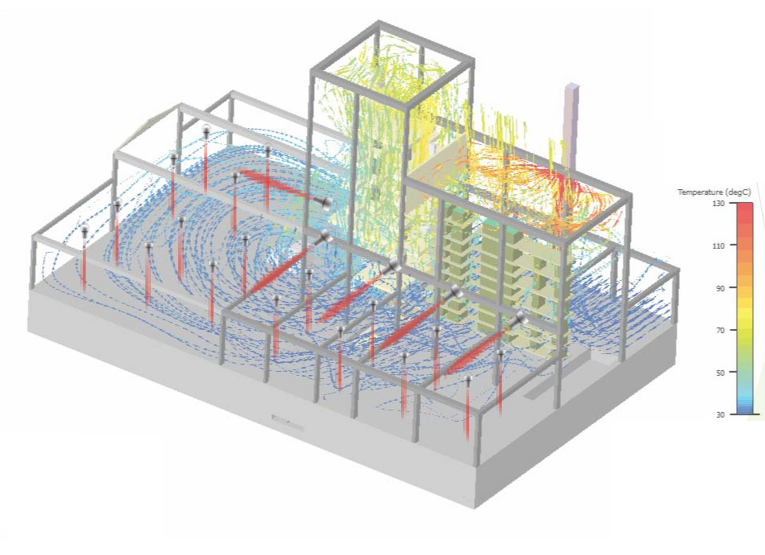
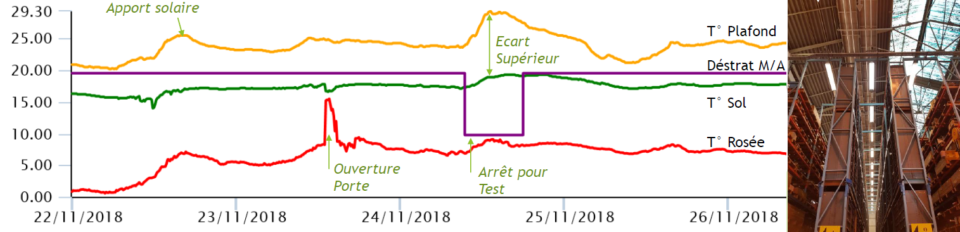
Thermal destratification can result in energy savings of approximately 25% to 30%.
ArcelorMittal Warehouse Equipment
Since 2018, Airius has carried out several projects to equip ArcelorMittal’s warehouses, including the one in Mardyck, in the Nord department of France.
The steel operations of the ArcelorMittal Group, the world’s leading steel producer with 96.42 million tons produced in 2018, are particularly vulnerable to the fragility of metals, which deteriorate rapidly when exposed to moisture. It is therefore essential for the group to avoid at all costs reaching the dew point—or dew temperature—which corresponds to the temperature threshold at which a mass of air will undergo the formation of liquid water through saturation.
Several thermal delamination projects have been implemented to address this issue and prevent any risk of damage to the manufactured metals.
The impressive dimensions of the warehouses (averaging 20 meters high, 150 meters long, and 50 meters wide) allow these implemented destratification projects to demonstrate their full potential.
For each project, a seven-year Energy Performance Contract (EPC) was established, including a performance guarantee of 20% energy savings. The implementation of each project is self-financed through the savings achieved each year.
Project phases – the example of the Mardyck warehouse
Phase 1 of the project involved installing Enless Wireless ambient temperature and humidity sensors in various areas of the warehouse, each characterized by consistent climatic conditions. Sensors communicating via 169 MHz Wireless M-Bus were installed on the floor, on the ceiling, and near the air mixers.
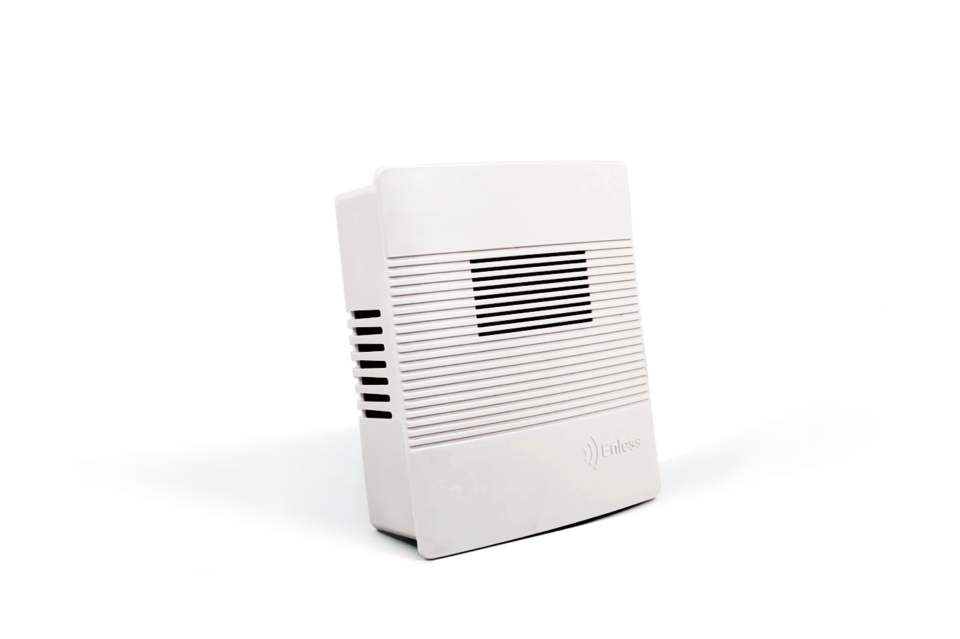
Critical temperature and humidity thresholds have been established, corresponding to dew points.
To ensure effective tracking of results, Pulse Enless Wireless transmitters were additionally installed and connected to the site’s electricity and gas meters to monitor changes in energy consumption on a near-weekly basis. This setup also made it possible to measure the energy consumption of each department within the group in detail, with a view to allocating overhead costs more precisely.
Phase 2 of the project involved Airius’s technical teams installing several destratifiers in the highest areas of the warehouse. The purpose of the destratifiers is to redirect the warm air that accumulates near the ceiling back toward the floor, without causing noise or drafts. This ensures uniform temperatures at ceiling level, even in very narrow spaces, and the dew point is never exceeded.

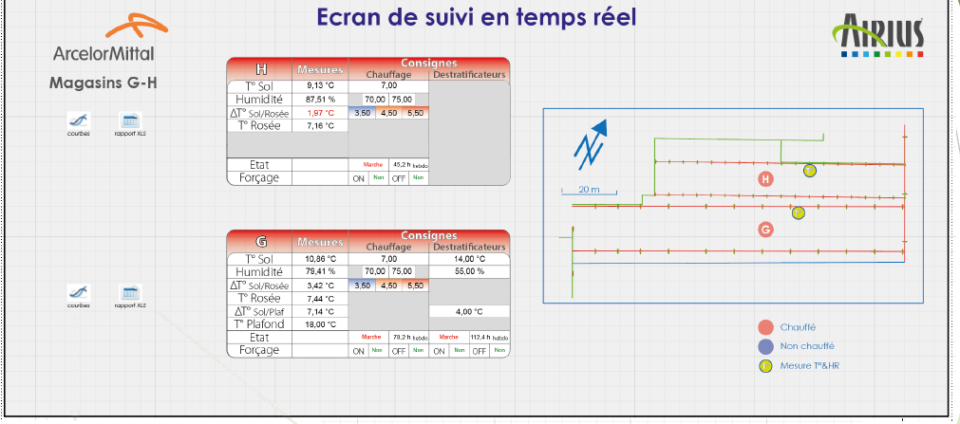
Phase 3 of the project involves monitoring ambient temperature and humidity data, as well as data transmitted by the Pulse Enless Wireless transmitters connected to the meters. Ambient data is transmitted every ten minutes on average (every five minutes in the most sensitive areas) by the Enless Wireless transmitters to the existing Lacroix Sofrel PCWIN 2 controller. The transmitted data is then analyzed and monitored daily by Airius’s management teams via the controller’s supervisory software.
What other projects are currently underway?
Installation work is also underway at ArcelorMittal’s sites in Nantes–Basse-Indre (involving 10 Enless Wireless ambient temperature and humidity transmitters) and Dunkirk (12 Enless Wireless contact probes, this time used to monitor door openings and closings as part of a destratification project).
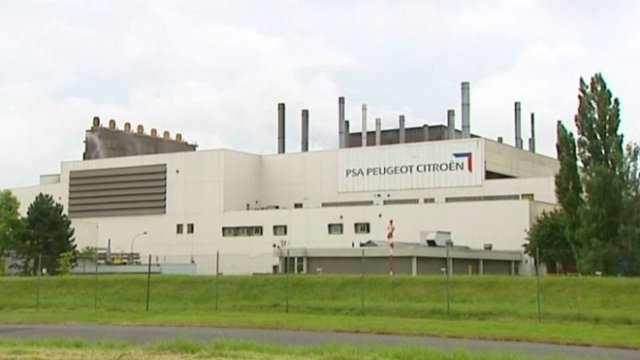
A destratification project has also been launched for the PSA automotive group at the PSA plant in Charleville. This led to an order for the first 12 enless radio transmitters, which were installed on the floors and ceilings of the warehouses. The first test phase, which was recently completed, involved fully equipping a test workshop and conducting a comparative analysis of the results collected from the test workshop against measurements taken in a reference workshop not equipped with a destratification system. Initial results already show a positive trend.
To learn more about Airius’s activities, visit www.airius.fr/.
Click on the icons below to share this article on social media >>>