A major challenge
Certain industrial sectors require closer monitoring of their energy consumption, which, given that it is central to their core business, is a strategic issue. This is true of the food industry in general and, more specifically, of syrup production, which requires considerable amounts of water.
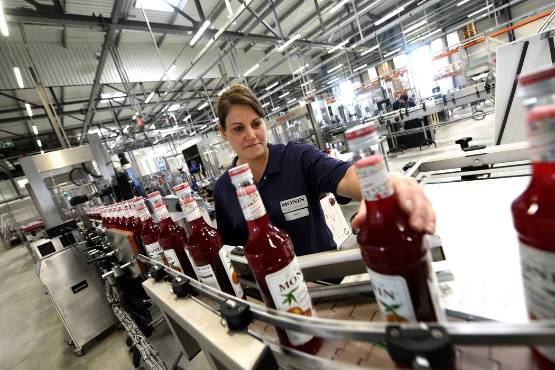
In the production of Monin’s premium syrups—a family-owned business based in Bourges since 2015— an average of 4,600 cubic meters of water is consumed each month (for general site operations and syrup production), enabling an impressive output of 12,000 bottles per hour and 25 million bottles annually.
In total, nearly 20,000 square meters of industrial space dedicated to syrup production are spread across the Bourges industrial zone in the Cher department of the Centre-Val de Loire region, at the Saint-Florent-sur-Cher and La Chapelle-Saint-Ursin sites.

BSE, Hervé Thermique, and Enless are collaborating on the implementation of a smart real-time water metering solution for Monin’s factories
In an effort to manage its energy and utility consumption, the Monin factory in Bourges, a major water consumer, sought to implement anautomated water consumption monitoring system at its industrial sitein order to forecast its bills, detect potential anomalies or failures such as leaks in its network, and avoid the need for its technical staff to manually read meters located in pits.
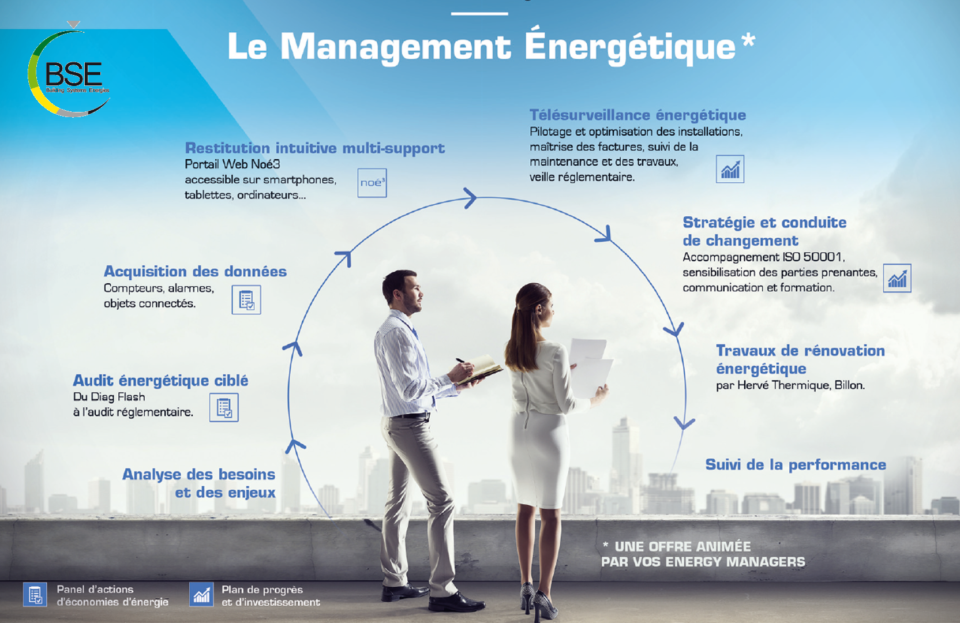
The subsidiaries of the Hervé Group’s Energy and Services division— BSE and Hervé Thermique, which specialize in energy efficiency (from audits to project implementation and performance monitoring) and building services engineering (HVAC, connected devices, etc.) —were responsible for implementing this large-scale project.
As part of its growth strategy, the Hervé Group is rolling out energy monitoring solutions combined with connected maintenance, offering its customers end-to-end support with performance guarantees.
Specifically, the client wanted to transmit data from water meters located in pits and sprinkler systems (fixed automatic water-based fire suppression systems), more than 100 meters away from the factory’s main buildings. The site’s specific characteristics made it impossible to install a wired system, which would also have taken longer and been more expensive to set up. The other essential requirement was to base the systems on a long-range, robust communication method, as the site consisted of buildings made of scrap metal and concrete.
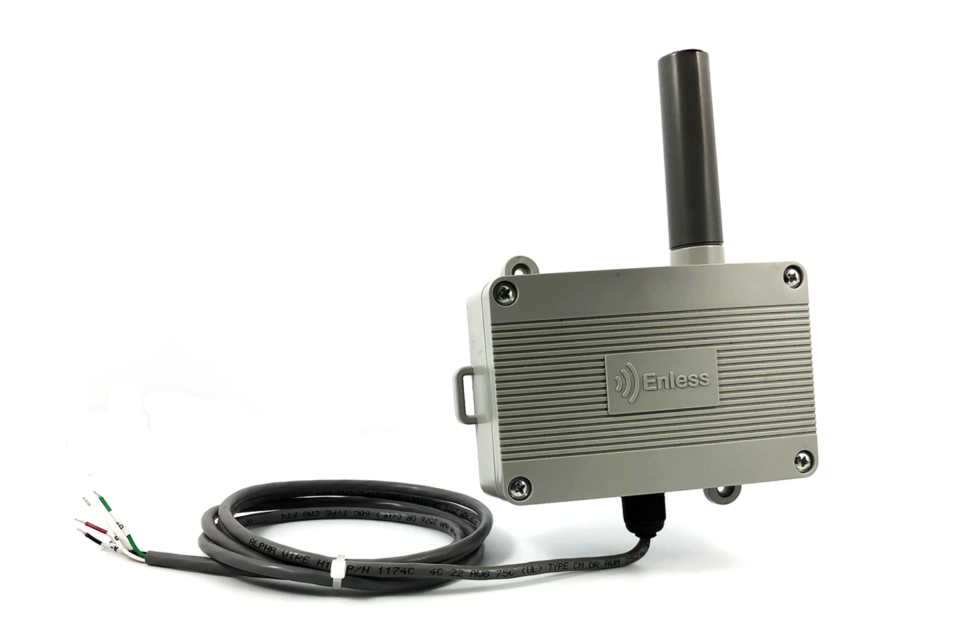
Since May 2019, several Enless Wireless Pulse transmitters operating in wireless mode on the 169 MHz frequency band (Wireless M-Bus mode) have been installed and paired with an Enless Wireless receiver and two repeaters at the Bourges site (La Chapelle-Saint-Ursin).
In fact, the 169 MHz Wireless M-Bus technology, which enables communication over distances of up to 2.5 km in open terrain, appeared to be the most suitable for monitoring large-scale buildings, such as industrial sites.
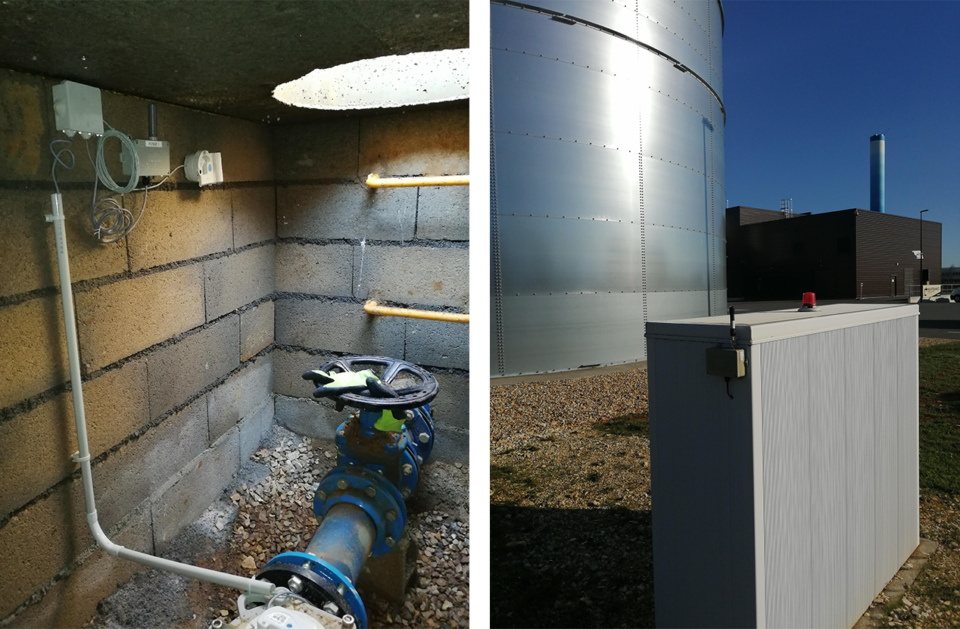
Julien Guillon, an energy efficiency engineer at BSE, and Gilles Pallier, a maintenance technician at Hervé Thermique, speak to how easy it is to install the transmitters at their client’s site: “In addition to providing high-quality products, Enless Wireless’s installation video tutorials are really helpful! We configured the transmitters to report data every 5 minutes, which allows us to receive frequent updates and thus perform a detailed analysis of the data.”
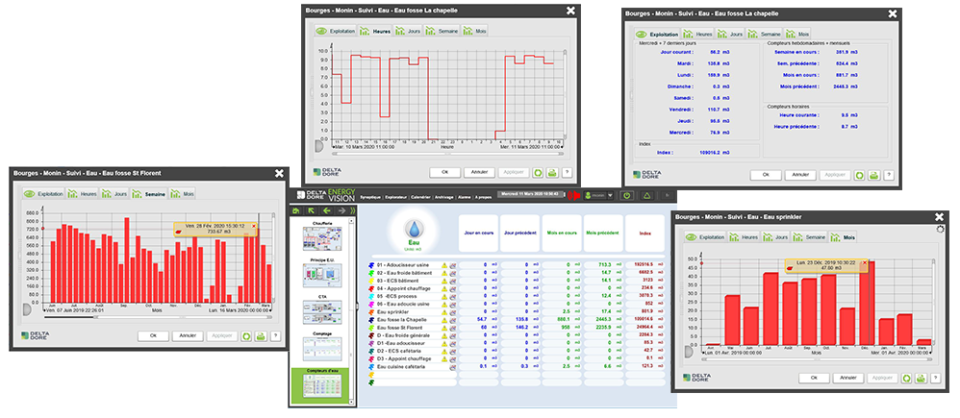
Once captured and transmitted by the Enless Wireless transmitters at intervals previously configured by the BSE / Hervé Thermique teams, the water consumption data is sent to the factory’s building management system. It is aggregated via the Delta Dore Energyvision controller and combined with data from about ten other water meters on the site that were historically connected via wired connections.
An on-site team of technicians monitors the formatted data in real time.
What are the results?
“Enless Wireless’s remote meter reading solutions have enabled our client to eliminate the manual meter readings that technical teams used to perform on meters that were sometimes buried in pits—a task that was far from comfortable! Technicians had to climb down into the pits, which required special equipment and coordination.” Julien Guillon, energy efficiency engineer at BSE.
In addition to reducing staffing costs associated with manual meter readings, the implementation of this solution has improved the accuracy of the data collected and analyzed, enabling more precise forecasting of the site’s water consumption costs.
Click on the icons below to share this article on social media >>